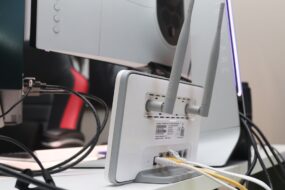
We’ve all been there. You’re deep into a crucial video call, the Wi-Fi signal drops, and suddenly you’re left staring at a frozen screen while your colleague wonders if you’ve decided to ghost the meeting. Reliable internet at home is essential, especially in a dedicated workspace. So, how do you improve Wi-Fi signal in your home office? Let’s dive into some effective strategies to boost your Wi-Fi signal and ensure you stay connected through thick and thin.
Understanding Wi-Fi Signal Strength
Before we jump into fixing the problem, it’s important to understand what affects Wi-Fi signal strength. Your router is the heart of your home office internet, but several issues can diminish its performance. Factors include:
- Distance: The further you are from the router, the weaker the signal.
- Obstacles: Walls, furniture, and appliances can interfere with the Wi-Fi signal.
- Interference: Other electronic devices, like microwaves and cordless phones, can disrupt your connection.
- Router Quality: Not all routers are created equal. Older models may not perform as well as newer ones.
In my experience, addressing these factors can significantly improve your connection, making your home office a more productive place.
1. Reposition Your Router
One of the simplest solutions for improving your Wi-Fi signal is moving your router. Ideally, it should be placed in a central location in your home office or the heart of your home. Here are a few tips on positioning:
- Elevate the router by placing it on a shelf or mounting it on a wall. High placement helps the signal travel further.
- Avoid placing your router in corners or enclosed spaces. Open areas allow the signal to spread more efficiently.
- Keep it away from other electronics. As mentioned, devices like microwaves can create interference.
Try different locations and do a quick speed test to see if your changes made a difference!
2. Upgrade Your Router
If your router is several years old, it might be time for an upgrade. Newer routers often have features that can enhance your Wi-Fi signal, such as:
- MIMO Technology: This allows multiple devices to communicate with the router simultaneously, which is great for busy home offices.
- Dual-Band or Tri-Band Options: These routers operate on different frequencies, reducing congestion, especially in a household filled with gadgets.
- Mesh Systems: For larger homes, a mesh network can provide wider coverage by using multiple router nodes.
Many people think all they need is a faster internet subscription, but the router plays an equally significant role in boosting your Wi-Fi signal. If you haven’t upgraded in a while, you might be missing out on better speeds and coverage.
3. Optimize Your Wi-Fi Settings
Many people get caught up in hardware without considering settings. Adjusting a few settings can work wonders. Here’s what to focus on:
- Change the Wi-Fi Channel: Routers often have default channels that can become crowded. Use Wi-Fi analyzer apps to find the least congested channel.
- Enable Quality of Service (QoS): This feature prioritizes bandwidth for essential applications, ensuring your video calls remain stable even during heavy usage.
- Update Firmware: Regular updates can improve performance and fix bugs. Make sure your router’s firmware is up to date.
In my opinion, most people don’t realize that tweaking these settings can lead to a noticeable difference in their internet experience. It’s worth checking!
4. Use Wired Connections When Possible
While Wi-Fi is convenient, a wired connection can provide more stability and speed for devices that require it most. If your home office setup allows, consider:
- Using Ethernet cables for desktop computers and gaming consoles. This direct connection avoids Wi-Fi issues altogether.
- Bringing devices closer to the router with a longer cable if you can’t move the router itself.
This isn’t always feasible for everyone, but if you can make it work, it’s one of the best ways to ensure a reliable connection.
5. Extend Your Wi-Fi Range
If you still experience issues after trying the above strategies, consider extending your Wi-Fi range with additional equipment. Here are some options:
- Wi-Fi Extenders: These devices receive your existing Wi-Fi signal and retransmit it, effectively increasing coverage in hard-to-reach areas.
- Powerline Adapters: These plug into your home’s electrical system, allowing you to extend your network through the wiring.
- Mesh Wi-Fi Systems: These systems use multiple nodes to create a single wi-fi network, covering larger areas without dead spots.
Using one of these solutions can help fill in gaps that your primary router might struggle to cover, especially if your home office is far from the router’s main location.
6. Minimize Interference
To improve your Wi-Fi signal, keeping potential interference at bay is vital. Here’s how you can mitigate disruptions:
- Identify Interference Sources: Devices like microwaves, cordless phones, and baby monitors often operate on the same frequency as your Wi-Fi, so move them away from your router if possible.
- Limit Smart Home Devices: Too many connected devices can strain your signal. Disconnect those that aren’t essential during your work hours.
- Switch to 5GHz Band: If your router supports it, using the 5GHz band can reduce congestion and interference since it’s typically less crowded than the traditional 2.4GHz band.
Many people don’t realize they might be creating interference without even knowing it. Being mindful of your surroundings can make a big difference.
7. Regularly Monitor Your Signal
Finally, keeping an eye on your Wi-Fi performance is essential for maintaining a strong connection. Here’s how to do it:
- Use tools like speed test apps to regularly check your internet speed at different times of the day.
- Monitor device usage to identify any potential reasons for slow speeds or buffer delays.
- Check for firmware updates periodically to ensure your equipment is running optimally.
Most people get comfortable and assume their Wi-Fi will always function at the best level without checking. But regularly monitoring performance can help you make rapid adjustments to enhance your signal strength.
Conclusion
So, how to improve Wi-Fi signal in your home office? It boils down to a mixture of tactics including repositioning your router, upgrading, optimizing settings, and possibly extending your range. With a little effort and some trial and error, you can enjoy a stronger, more reliable connection, ensuring that dropped calls and slow downloads are a thing of the past.
Implementing these wifi signal tips might take some time upfront, but the payoff in terms of productivity is invaluable. Take the time to experiment with these strategies, and you might just find the perfect solution for your unique space!