
1. Introduction to HubSpot CRM and Business Growth
In today’s digital world, businesses need smart tools to manage customers, track leads, and grow efficiently. Customer Relationship Management (CRM) systems have become essential for companies that want to improve their marketing, sales, and customer service processes. Among the many CRM platforms available, HubSpot CRM has emerged as one of the most popular and powerful solutions for businesses of all sizes.
HubSpot CRM is designed to help businesses manage their customer relationships in a simple and effective way. It combines marketing, sales, and customer service tools into one unified platform, making it easier for teams to work together and achieve better results.
One of the main reasons for HubSpot’s popularity is its user-friendly interface. Unlike many traditional CRM systems that can be complex and difficult to use, HubSpot offers a clean and intuitive design that allows users to get started quickly without extensive training.
Businesses today face intense competition, and having the right tools can make a significant difference. HubSpot CRM helps companies track customer interactions, automate repetitive tasks, and gain valuable insights into their performance.
Another advantage of HubSpot is its scalability. Whether a business is a small startup or a large enterprise, the platform offers tools and features that can grow with the company.
In addition to its core CRM functionality, HubSpot provides marketing automation, sales tools, and customer service solutions. This all-in-one approach allows businesses to manage their entire customer journey from one platform.
As companies continue to shift toward digital strategies, CRM systems like HubSpot play a crucial role in helping businesses build strong customer relationships and achieve long-term growth.
2. Key Features of HubSpot CRM
HubSpot CRM offers a wide range of features designed to help businesses manage their customer relationships effectively. These features are organized into different tools that support marketing, sales, and customer service activities.
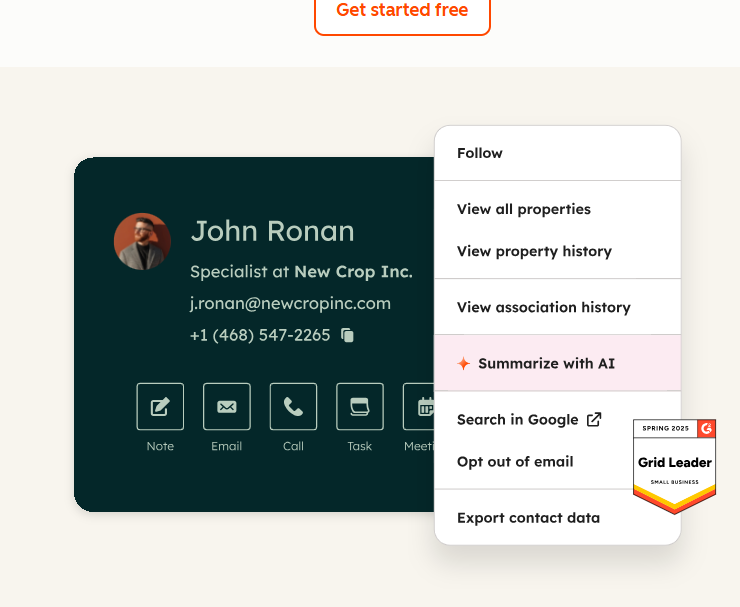
One of the most important features of HubSpot CRM is contact management. Businesses can store detailed information about their customers, including contact details, communication history, and interactions with the company.
The platform also includes deal tracking, which allows sales teams to manage their sales pipelines and track the progress of deals. This feature helps businesses understand where each opportunity stands and what actions are needed to close sales.
Email tracking and automation are also key features of HubSpot CRM. Users can send emails directly from the platform and track whether recipients open or click on them. This information helps sales and marketing teams understand customer engagement.
Another powerful feature is task management. Teams can create tasks, assign them to team members, and track their completion. This ensures that important activities are not missed.
HubSpot also provides reporting and analytics tools that allow businesses to measure their performance. Users can generate reports on sales, marketing campaigns, and customer interactions.
The platform includes integration capabilities, allowing businesses to connect HubSpot with other tools and software they use.
These features make HubSpot CRM a comprehensive solution for managing customer relationships and improving business processes.
3. HubSpot Marketing Tools and Automation
Marketing plays a crucial role in business growth, and HubSpot offers powerful tools to help businesses create and manage their marketing campaigns.
One of the key marketing features is email marketing. Businesses can create professional email campaigns and send them to targeted audiences. HubSpot’s automation features allow users to schedule emails and send personalized messages based on customer behavior.
Content management is another important feature. HubSpot allows businesses to create and manage website content, blogs, and landing pages. This helps companies attract and engage visitors through valuable content.
Lead generation tools are also included in HubSpot’s marketing suite. Businesses can create forms, pop-ups, and landing pages to capture leads from their websites.
Marketing automation is one of the most powerful aspects of HubSpot. Businesses can set up workflows that automatically perform actions based on customer interactions. For example, when a user signs up for a newsletter, the system can automatically send a welcome email.
HubSpot also provides analytics tools to track the performance of marketing campaigns. Businesses can measure metrics such as email open rates, website traffic, and conversion rates.
These marketing tools help businesses attract more customers, engage their audience, and improve their overall marketing strategy.
4. HubSpot Sales Tools and Pipeline Management
Sales teams need efficient tools to manage leads and close deals. HubSpot provides a range of sales tools that help businesses streamline their sales processes.
One of the main features is pipeline management. Sales teams can visualize their sales process and track deals at different stages. This helps them understand which opportunities need attention.
HubSpot also includes email templates and automation features that allow sales representatives to send personalized messages quickly.
Meeting scheduling is another useful feature. Sales teams can share booking links with prospects, allowing them to schedule meetings without back-and-forth communication.
The platform also provides call tracking and recording features. Sales teams can track their calls and analyze conversations to improve their performance.
HubSpot’s sales automation tools help reduce manual tasks. For example, the system can automatically update deal statuses or send follow-up emails.
These tools enable sales teams to work more efficiently and focus on closing deals rather than managing administrative tasks.
5. Customer Service and Support Tools
Customer satisfaction is essential for long-term business success. HubSpot provides customer service tools that help businesses deliver excellent support.
One of the main features is the ticketing system. Businesses can track customer issues and ensure that they are resolved quickly.
Live chat and chatbot features allow companies to communicate with customers in real time. This improves response times and enhances customer experience.
Knowledge base tools enable businesses to create self-service resources such as FAQs and help articles. Customers can find answers to common questions without contacting support.
HubSpot also provides feedback tools that allow businesses to collect customer feedback and improve their services.
These customer service tools help businesses build strong relationships with their customers and increase satisfaction.
6. Benefits of Using HubSpot for Business Growth
Using HubSpot CRM offers several benefits that contribute to business growth.
One of the biggest advantages is efficiency. By automating repetitive tasks, businesses can save time and focus on important activities.
The platform also improves collaboration between teams. Marketing, sales, and customer service teams can work together using shared data.
HubSpot provides valuable insights through its analytics tools. Businesses can make data-driven decisions and improve their strategies.
Another benefit is scalability. As businesses grow, they can upgrade their HubSpot plans and access more advanced features.
The all-in-one nature of HubSpot reduces the need for multiple tools, simplifying business operations.
These benefits make HubSpot a powerful platform for businesses looking to grow and succeed in a competitive market.
7. Tips for Getting Started with HubSpot CRM
Getting started with HubSpot CRM is simple, but following a few tips can help businesses maximize its potential.
First, businesses should clearly define their goals. Understanding what they want to achieve with HubSpot helps them use the platform effectively.
Setting up contact management and organizing data is an important first step. This ensures that all customer information is easily accessible.
Businesses should also explore HubSpot’s automation features to save time and improve efficiency.
Training team members is essential to ensure that everyone understands how to use the platform.
Regularly reviewing analytics and performance reports helps businesses identify areas for improvement.
Finally, businesses should continuously optimize their processes and adapt their strategies based on results.
By following these tips, businesses can fully leverage HubSpot CRM and achieve long-term growth
.