Make Learning Mathematics an Enjoyable Experience with Bhanzu
Mathematics plays an important role in children’s education, helping them develop logical reasoning, analytical thinking, and problem-solving abilities. However, learning math can sometimes feel difficult when children struggle to understand concepts or rely entirely on memorizing formulas. Bhanzu offers a mathematics-focused learning experience designed to help children develop a better understanding of numbers and approach the subject with greater confidence.
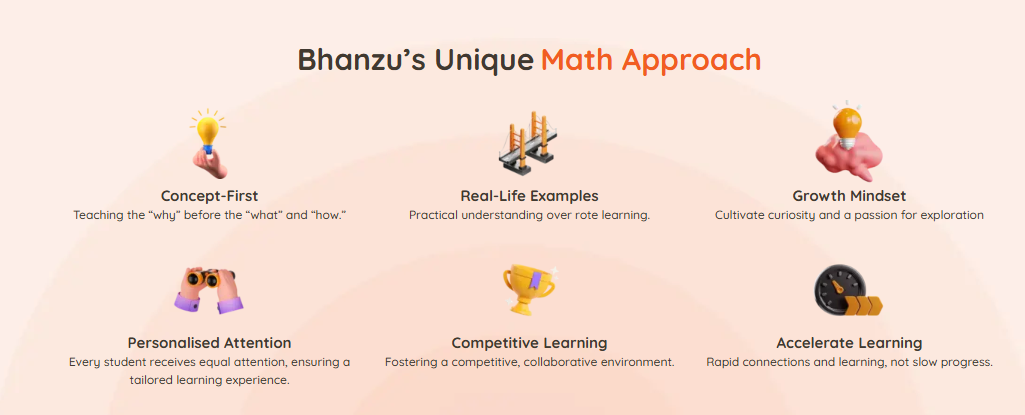
Through online learning programs, Bhanzu aims to make mathematical concepts more accessible and engaging for young learners. Its approach emphasizes understanding, practice, and developing useful calculation skills. Rather than treating mathematics as a collection of rules to memorize, children can work toward understanding how different concepts connect and how they can be applied to everyday situations.
For parents seeking additional educational resources, Bhanzu provides an opportunity to explore a structured approach to mathematics learning that can complement regular school studies.
Strengthen Number Sense and Mathematical Understanding
Number sense is the ability to understand numbers, recognize relationships, and make reasonable calculations. It provides an important foundation for learning arithmetic and more advanced mathematical topics.
Bhanzu focuses on helping children develop mathematical understanding through its learning programs. When students become familiar with number patterns and mathematical relationships, they may find it easier to solve problems and understand new concepts.
For example, recognizing that multiplication can represent repeated addition helps children understand why multiplication works. Similarly, understanding how numbers can be divided into equal groups can make division easier to visualize.
Parents can encourage number sense through everyday activities. Counting objects, comparing quantities, measuring ingredients, and estimating distances provide opportunities to practice mathematical thinking outside the classroom.
Consistent practice helps children become more comfortable working with numbers. By focusing on understanding rather than memorization alone, students can develop a foundation that supports their future learning.
Improve Calculation Skills Through Mental Math
Mental math helps children perform calculations using their understanding of numbers instead of depending exclusively on written methods or calculators. These skills can support everyday problem-solving and help students become more flexible when working with mathematical questions.
Bhanzu emphasizes mathematical skill development, including calculation strategies and numerical understanding. Learning different ways to approach calculations can help children discover methods that work well for them.
For instance, a child calculating 29 plus 16 might first add 30 and 16, then subtract one. This type of strategy demonstrates how understanding number relationships can simplify calculations.
Mental math is also useful in daily life. Children can practice by calculating small shopping totals, estimating quantities, working with time, or solving simple puzzles.
The aim is to build accuracy and understanding while gradually improving speed. Children should have enough time to learn each strategy properly instead of feeling pressured to produce immediate answers.
With regular practice and suitable guidance, mental calculation can become a valuable part of a child’s mathematical development.
Develop Problem-Solving Skills with Bhanzu
Problem-solving is an important part of mathematics because it teaches children to understand questions, identify relevant information, and choose suitable methods to find solutions.
Bhanzu’s mathematics learning approach provides an opportunity for children to work on mathematical concepts and develop their reasoning abilities. Learning to explain each step of a solution can help students understand not only what the answer is but also why it makes sense.
Word problems are especially useful for developing these skills. A question about sharing objects equally, calculating the cost of several items, or determining the time needed to complete an activity requires children to interpret information before performing calculations.
Parents can support problem-solving by encouraging children to explain their thinking. Questions such as “Which information is important?” and “Can you solve this another way?” can help children explore different approaches.
Mistakes should also be treated as learning opportunities. Reviewing an incorrect answer can reveal misunderstandings and help students improve their methods.
Developing these habits can support children’s progress in mathematics and encourage thoughtful decision-making in other areas of learning.
Explore Flexible Online Math Learning
Online education provides families with additional ways to organize learning around school schedules, extracurricular activities, and other responsibilities. A suitable digital learning program can give children opportunities to practice concepts and receive instruction in a convenient setting.
Bhanzu offers online mathematics learning options for children. Parents can explore its website to understand the available programs, teaching formats, age requirements, and lesson structures.
Creating a comfortable learning environment can help children focus during online sessions. A quiet study area, a reliable internet connection, and an appropriate device can make it easier to participate in lessons.
A balanced schedule is equally important. Children benefit from regular learning opportunities, but they also need breaks, physical activity, hobbies, and time with family. Short practice sessions and consistent routines can help maintain interest without creating unnecessary pressure.
Before enrolling, parents should review course details and ask about instructor support, progress monitoring, class schedules, and fees. This makes it easier to determine whether an online program fits the child’s learning preferences and educational goals.
Build Confidence and Encourage Independent Learning
Confidence can influence how children respond to challenging questions. Students who feel comfortable asking questions and trying different methods may become more willing to explore unfamiliar mathematical concepts.
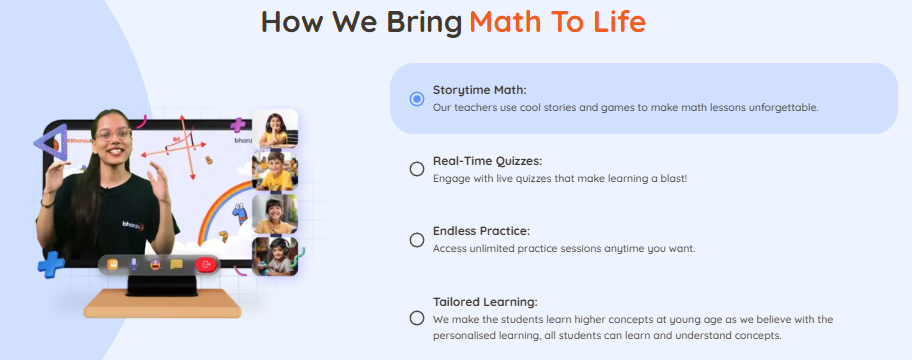
Bhanzu aims to support children’s mathematical development by making learning more engaging and focusing on skill improvement. As children practice and recognize their progress, they can begin to approach mathematical challenges with a more positive attitude.
Parents can encourage this development by praising effort, patience, and persistence. Instead of focusing only on correct answers, recognize when a child uses a thoughtful strategy or keeps working through a difficult question.
Independent learning is another valuable skill. Encourage children to attempt a problem, identify what they understand, and ask for help when they encounter difficulties. This approach allows them to take an active role in their education.
Connecting math to real-life interests can also make practice more enjoyable. Cooking, board games, sports, building activities, and simple budgeting exercises introduce mathematical ideas in familiar situations.
With encouragement and consistent practice, children can gradually develop greater independence and confidence in their abilities.
Choose the Right Learning Program with Bhanzu
Every child has different educational needs, interests, and learning preferences. Selecting a mathematics program should begin with understanding the skills a child wants to improve and the type of support that would be most helpful.
Bhanzu provides an option for parents who want to explore additional mathematics learning for their children. Its website can help families learn about available courses and understand the program’s educational approach.
Before making a decision, review the curriculum, class format, pricing, enrollment requirements, and expected learning outcomes. Consider whether the program is suitable for your child’s current level and whether the schedule fits comfortably into the family’s routine.
It is also helpful to discuss learning goals with your child. Some children may want to improve arithmetic skills, while others may need additional practice with mathematical reasoning or more challenging concepts.
Explore the available information on the Bhanzu website and compare it with your family’s requirements before enrolling.
Building strong mathematical skills takes time, practice, and encouragement. By combining a suitable learning environment with regular practice and a positive attitude, children can develop a better understanding of mathematics and valuable problem-solving abilities for the future. Bhanzu offers families an opportunity to explore a structured approach to learning and support children’s continuing educational journey.